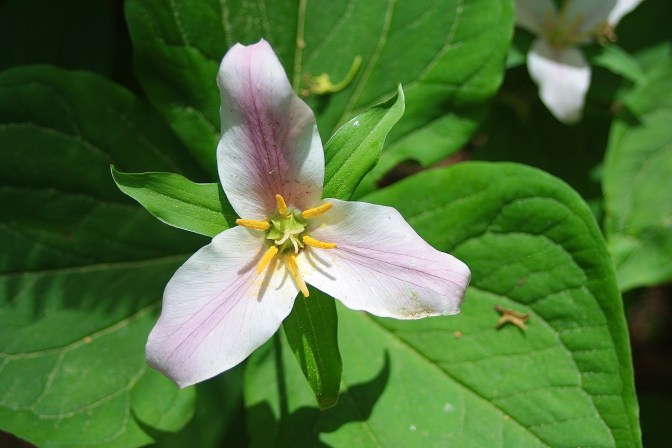
Port Gamble, Washington – Here in northwest Washington, the natives are restless. Human natives may be ready for a jolt of sunshine and warmth, but the plant natives have also been patiently minding their manners in the quiet winter forest…sitting dormant with nothing to do, no place to go. Additional sunlight and warmth is changing all that and the green natives are on the move once again.
As a gardener, I know how much attention some plants demand in order to thrive and spread, but the native plants in the woods seem to thrive and multiply at a rate much higher than their showy cultivated cousins in manicured beds. Many seem to possess some sort of magical growth serum. What is their superpower? At first glance, this wild bunch doesn’t appear to have much in common. Some have tough leaves, while others are quite delicate. Some grow upright and others are creepers. Some love water and some prefer drier soil.
But take a dive underground and you will discover see that many woodland plants share the same secret. In the underground world of roots, rocks, mycillium, organic bits and occasional creature tunneling through, you’ll find a rather unusual web/maze of growth spreading out horizontally like a complex freeway system. They are actually modified underground plant stems called rhizomes that send out both roots and shoots from nodes that dot the special stem as it pushes through the soil. Rhizomes grow sideways underground shooting up new plants as they go.
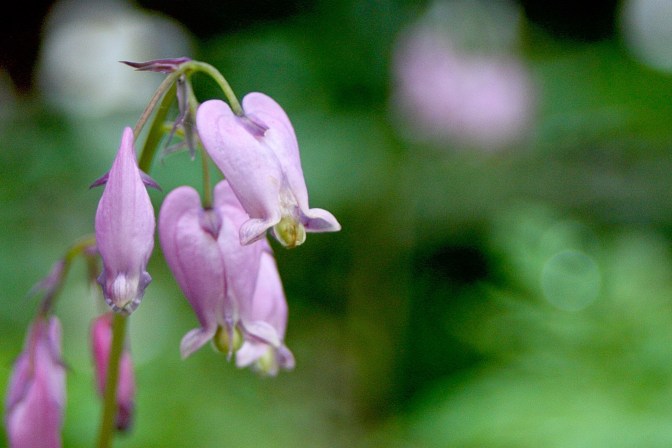
Rhizomes are both a blessing and curse in that you can’t see them or detect their constant advance into new territory. In the forest, this is a great blessing indeed as rhizomal plants cover the ground, protect the soil, retain moisture and provide cover for a host of organisms. However, in a residential flower bed, rhizomal plants can take over and once present, are very difficult to remove. Just a tiny piece of rhizome left underground can start a whole new production line of plants popping out of the ground like a pack of wild moles.
As you walk through a native forest, notice the plants covering the forest floor. Are entire slopes covered by the same species? Sword fern have fast growing rhizome networks, while wild ginger, maidenhair fern and bleeding heart spread more slowly. What characteristics enable various plants to find and hold their place as they compete for sunlight, moisture and nutrients?
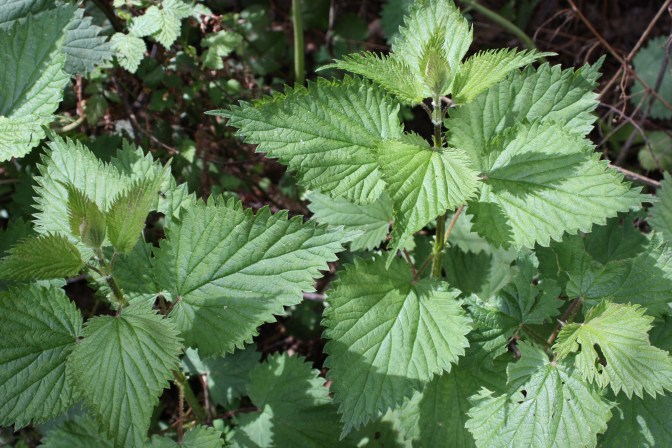
The common or stinging nettle is a plant that propagates by seed and slow growing rhizomes. They are often found along the fringes/edges of forests, where there is extra light and plenty of space to spread out. They form dense mats of plants that return year after year, sporting their signature zigzag leaves that deliver an unforgettable sting when touched. The sting can be disarmed in a pot of boiling water and these highly nutritious greens can be made into a delicious soup.
Non-native Himalayan blackberries strike fear in the hearts of local gardeners. They remind me of the Slinkie toy that can walk down stairs on its own. These amazing plants literally root anywhere one of their long canes touch the ground and one blackberry plant can live for decades, creating thickets that outcompete natives. One wild blackberry plant can live 25 years and produce millions of seeds.
Some native species that spread by rhizomes include Cattails, Solomon’s Seal, False-lily-of-the-valley, Vanilla Leaf, Inside-out Flower, Pacific Bleeding Heart, Redwood Sorrel, Wild Ginger, Bunchberry, and many ferns. Trilliums also have short fleshy rhizomes.

 Pacific Wonder Tracker